Material Comparison
Polyurethane vs. Natural Rubber: Which Should You Choose?
2025-07-107 min read
Back to Blog
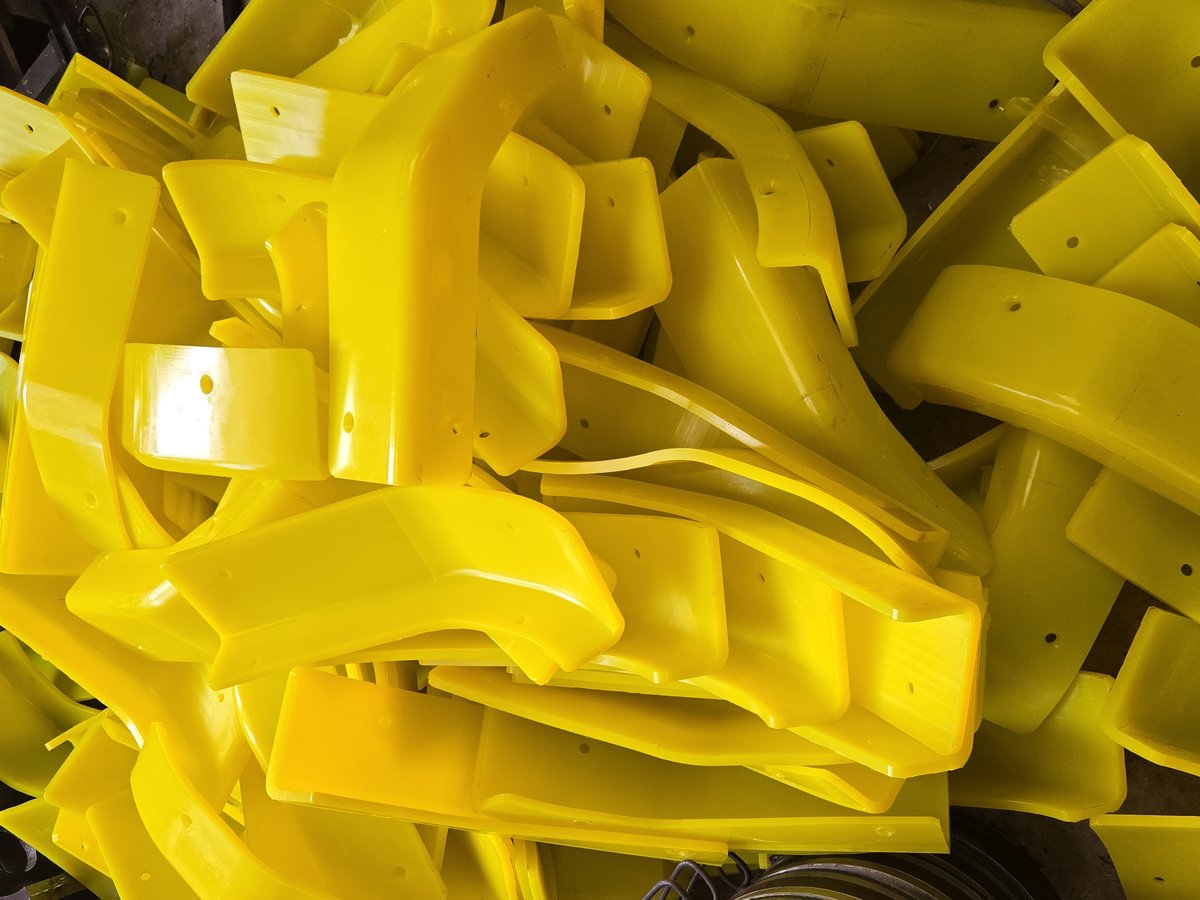
A Practical Comparison for Industrial Wear, Sealing, and Vibration Applications
Polyurethane and natural rubber are both elastomers used for wear protection, sealing, and vibration isolation. But they have fundamentally different properties, and choosing the wrong material can result in premature failure or unnecessary cost. This article compares PU and rubber across the key performance criteria for industrial applications.
Head-to-Head Comparison
| Property | Cast Polyurethane | Natural Rubber |
|---|---|---|
| Abrasion resistance | Excellent (3–5× rubber) | Good |
| Oil resistance | Good to Excellent | Poor |
| Tear strength | Excellent | Good |
| Load-bearing capacity | Excellent | Moderate |
| Dynamic flex fatigue | Good | Excellent |
| Low temperature (-40°C) | Good | Excellent |
| High temperature (>80°C) | Poor | Good |
| Chemical resistance | Good (most acids/alkalis) | Moderate |
| UV/ozone resistance | Moderate | Poor (without additives) |
| Custom hardness range | Shore A 20 – Shore D 80 | Shore A 20–90 |
| Cost (material) | Higher | Lower |
| Cost (total lifecycle) | Often lower | Higher (shorter life) |
When to Choose Polyurethane
- Applications involving oil, fuel, or hydraulic fluid contamination
- High abrasion environments (mining, aggregate, bulk handling)
- High load-bearing requirements (solid wheels, structural wear parts)
- Applications requiring precise hardness control
- Where longer service life justifies higher material cost
When to Choose Rubber
- Applications with continuous dynamic flexing (conveyor belts, hoses)
- Very low temperature environments (below -40°C)
- High temperature applications (above 80°C continuous)
- Budget-constrained applications where shorter life is acceptable
- Applications requiring NSF/FDA compliance for food contact (use food-grade rubber)
Not Sure Which Material Is Right?
Contact Jiasheng Plastic with your application requirements. We supply both cast polyurethane and UHMWPE products and can recommend the optimal material for your specific conditions.
fengjian@jsltupe.com | www.jsltupe.comComparisonRubberElastomerMaterial Selection
Related Articles
Need Polyurethane Products?
Custom cast PU sheets, rods, and machined parts. Fast quotes, competitive pricing.
Get a QuoteView Products